Why does free chlorine keep dropping between weekly pool service visits?
The common reasons chlorine disappears between visits and how to keep a residual holding all week.
Chlorine gets consumed by sunlight, heat, swimmer waste, and organic debris, and it disappears fast when stabilizer is too low to protect it. High bather load or early algae also raise demand. Check cyanuric acid, sun exposure, and usage, since the residual usually vanishes for one of these reasons.
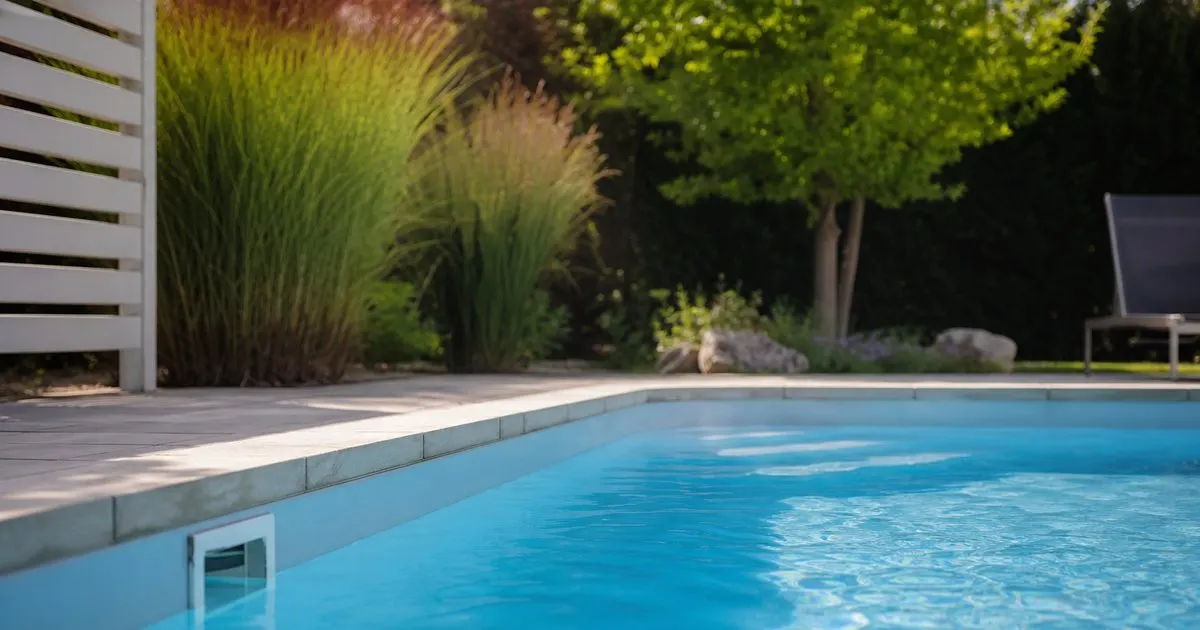
Sunlight burns it off
The most common reason chlorine vanishes is the sun. Ultraviolet light breaks down unprotected free chlorine quickly, and an outdoor pool with little or no stabilizer can lose most of its chlorine in a single sunny day. If a pool reads fine on service day and zero by midweek, sunlight is the first suspect. Related: How do you balance pool water chemistry on a weekly service route?
The fix is cyanuric acid, which shields chlorine from the sun so a residual survives between visits. A pool with no stabilizer needs some, but the goal is a balanced amount, because too much causes its own problems. Related: How much chlorine does a green pool need to clear up quickly?
Keep reading: How do you balance pool water chemistry on a weekly service route?, What is the best way to log chemical readings at every pool stop?, When should you shock a residential pool during the peak swim season?. See how PoolTendr helps you pool service route scheduling and chemical logs.
High demand is eating it
Chlorine is consumed by whatever it has to sanitize. Heavy bather loads, leaves, pollen, rain, and organic debris all create demand that burns through your residual. A pool under a tree or hosting a busy family will drink chlorine faster than a quiet, covered one.
When demand is the cause, the answer is not just more chlorine but reducing the load. Better skimming, cleaning the filter, and keeping debris out all lower the demand so your chlorine lasts.
Too much stabilizer locks it up
The opposite of no stabilizer is just as troublesome. When cyanuric acid climbs too high, it locks the chlorine and reduces its ability to sanitize, so the pool can read a chlorine number yet still struggle to stay clear. Season-long use of stabilized chlorine is how this sneaks up. Related: When should you shock a residential pool during the peak swim season?
If a pool has plenty of chlorine on paper but keeps losing the fight, test the stabilizer. When it is too high, partial dilution with fresh water is the real remedy, not more chlorine.
Track the trend to find the cause
A single low reading is a data point, but the pattern is the diagnosis. A pool that consistently drops to zero between visits is telling you something specific, whether it is sun, demand, or stabilizer, and only a record over several weeks reveals which.
PoolTendr keeps every reading on the pool's timeline, so you can see the chlorine trend across visits, pin down why it keeps dropping, and adjust stabilizer or frequency instead of guessing week after week. Related: What is the best way to log chemical readings at every pool stop?
- Sunlight destroys unprotected chlorine fast.
- Bather load and debris create chlorine demand.
- Too much stabilizer locks chlorine up.
- Track the trend to diagnose the real cause.

Julien Jimenez
Julien Jimenez is an independent software builder based in Paris. He designs, ships, and operates focused SaaS products for small businesses and independent professionals. Read the full author page.
Frequently asked questions
Can low stabilizer really burn off chlorine that fast?
Yes. Without enough cyanuric acid, ultraviolet light can destroy a large share of free chlorine within hours on a sunny day. Bringing stabilizer into the recommended range dramatically slows that loss.
Is disappearing chlorine a sign of algae?
It can be. Early or invisible algae creates chlorine demand that consumes the residual before you see green. If stabilizer and sun exposure are normal but chlorine still vanishes, suspect an organic or algae load.
Every Pool, Every Reading, On Route
Pool service route scheduling and chemical logs. PoolTendr is built to help you put this into practice.
Start free trialMore from the PoolTendr blog
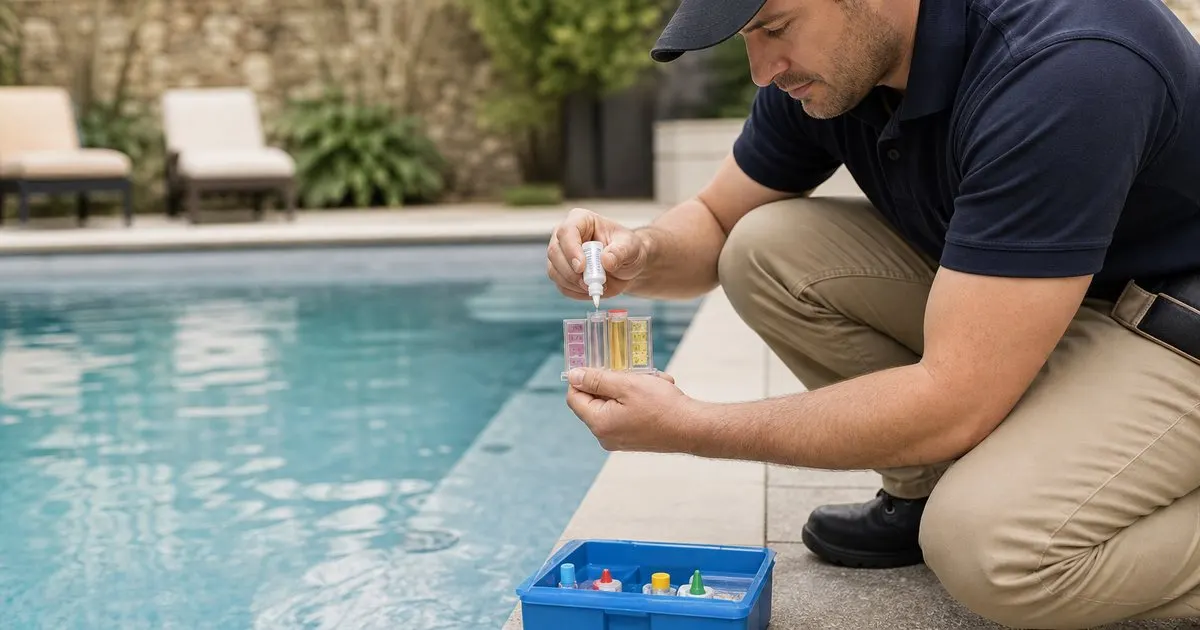
How do you balance pool water chemistry on a weekly service route?
What is the best way to log chemical readings at every pool stop?
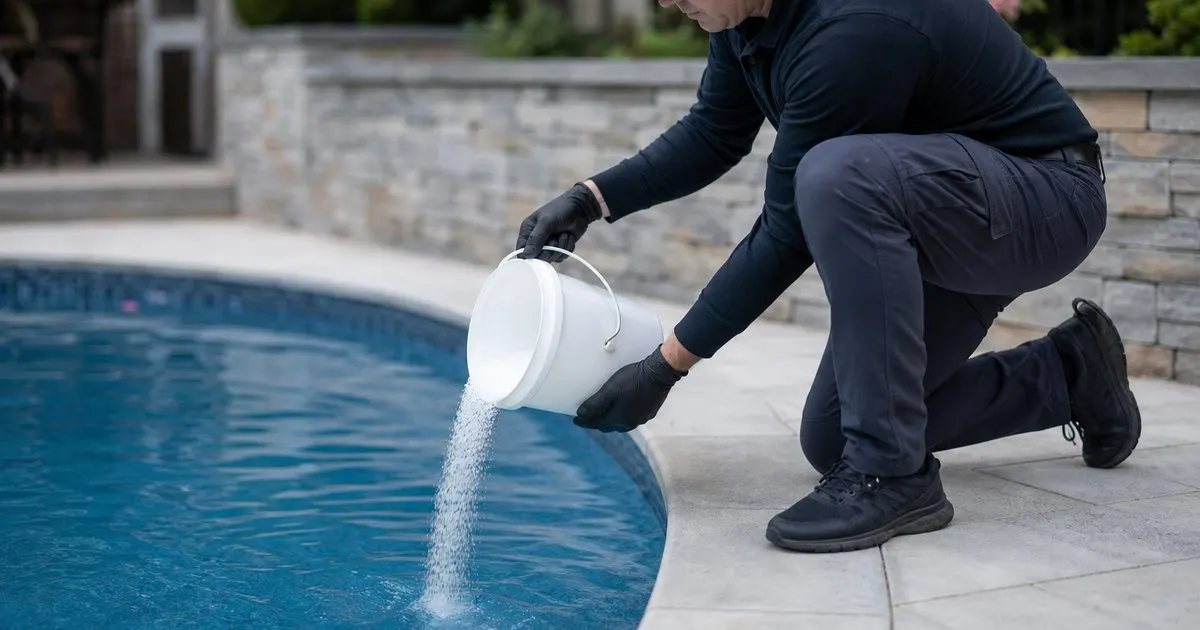
When should you shock a residential pool during the peak swim season?
Get the PoolTendr playbook
Practical guides on pool service software, straight to your inbox as we publish them. No spam, unsubscribe any time.