Which chemicals should a pool technician carry on a daily service route?
A practical loadout of the sanitizers and balancers a route tech needs to handle most pools in a day.
Stock a primary sanitizer such as liquid chlorine or tablets, plus pH decreaser and increaser, alkalinity increaser, stabilizer, and shock. Add algaecide, a clarifier, and calcium as needed. Carry a reliable test kit so you dose to measured readings, since guessing wastes product and money.
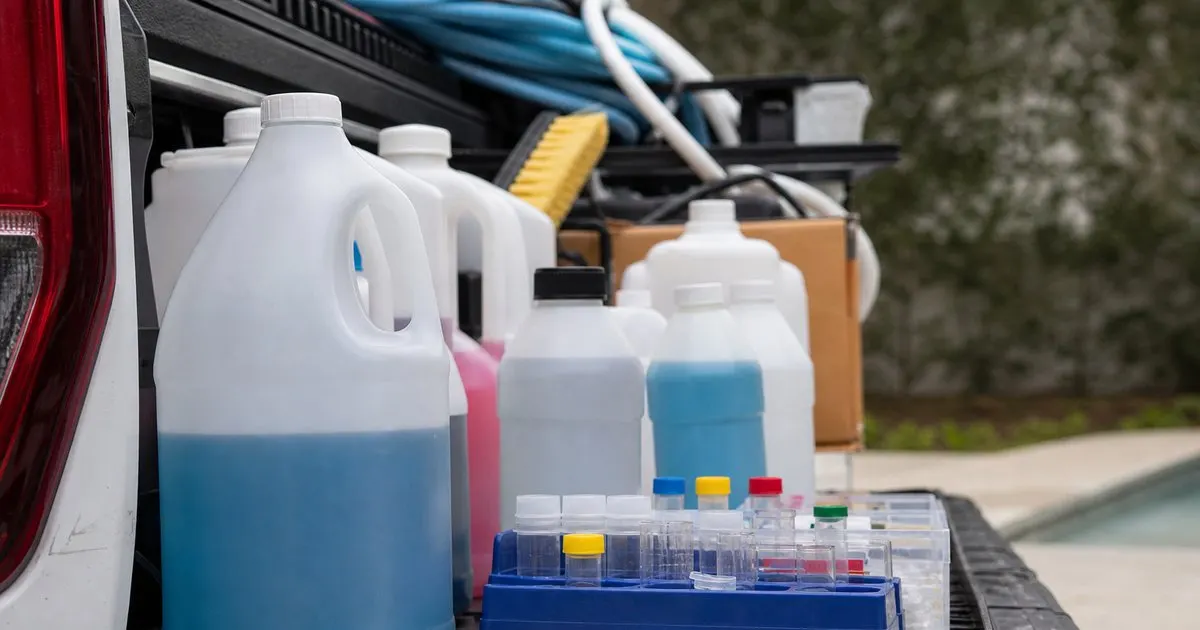
Sanitizer is the core
Chlorine is the workhorse of the truck. Most route techs carry tablets for feeders and floaters plus a form of shock for boosting or clearing pools. The exact product mix depends on your pools, but sanitizer in a form you can add quickly at every stop is non-negotiable. Related: Why does free chlorine keep dropping between weekly pool service visits?
Carry enough to top off a route without running back to resupply. Running out of chlorine two pools before the end of the day means either a return trip or a pool left unsanitized, and neither is acceptable. Related: How much chlorine does a green pool need to clear up quickly?
Keep reading: How do you balance pool water chemistry on a weekly service route?, What is the best way to log chemical readings at every pool stop?, Why does free chlorine keep dropping between weekly pool service visits?. See how PoolTendr helps you pool service route scheduling and chemical logs.
pH and alkalinity adjusters
Balancing chemicals ride along with the sanitizer. Acid to bring down high pH and alkalinity is used constantly, since pool water tends to drift upward. Having it on the truck means you can correct pH on the spot rather than leaving a pool where chlorine works poorly. Related: How do you balance pool water chemistry on a weekly service route?
Carry a means to raise pH and alkalinity too, even if you use it less often. A pool that has been diluted by heavy rain or fresh fill can drop low, and you want to correct it that visit, not next week.
Stabilizer and specialty items
Cyanuric acid to protect chlorine from the sun belongs on the truck for pools running low on stabilizer. Alongside it, many techs carry algaecide, a clarifier, and calcium to raise hardness in soft water. These are not every-stop items, but you will need them somewhere on the route. Related: What is the best way to log chemical readings at every pool stop?
The key with specialty chemicals is knowing which pools need them before you leave, so you carry the right amount rather than a truck full of product you never open.
Let the route tell you what to load
The smartest loadout comes from knowing your pools. If half the route ran low on stabilizer last week or three pools are trending toward an algae problem, that shapes what you bring today. Loading blind means either shortages or hauling excess weight and cost.
PoolTendr keeps each pool's readings and trends on its timeline, so before you load the truck you can see which pools are drifting and stock exactly the chemicals the day's route will actually need.
- Carry ample sanitizer in a form you can add fast.
- Bring pH and alkalinity adjusters for the constant drift.
- Keep stabilizer and specialty items for the pools that need them.
- Let each pool's trend decide your daily loadout.

Julien Jimenez
Julien Jimenez is an independent software builder based in Paris. He designs, ships, and operates focused SaaS products for small businesses and independent professionals. Read the full author page.
Frequently asked questions
Is liquid chlorine or tablets better for route work?
Liquid chlorine acts fast and adds no stabilizer, which suits pools that already have enough cyanuric acid. Tablets are convenient and slow release but raise stabilizer over time. Many techs carry both and choose per pool.
Do you really need a test kit if you know your pools?
Yes. Water chemistry shifts with weather, use, and refills, so measured readings prevent overdosing and callbacks. Dosing by habit eventually leads to a cloudy or unbalanced pool.
Every Pool, Every Reading, On Route
Pool service route scheduling and chemical logs. PoolTendr is built to help you put this into practice.
Start free trialMore from the PoolTendr blog
How do you balance pool water chemistry on a weekly service route?
What is the best way to log chemical readings at every pool stop?
Why does free chlorine keep dropping between weekly pool service visits?
Get the PoolTendr playbook
Practical guides on pool service software, straight to your inbox as we publish them. No spam, unsubscribe any time.