When should a pool technician clean a cartridge filter instead of replacing the element?
Pressure gauges, pleat condition, and cleaning history all tell you whether a cartridge has another season left. Here is how to decide on the pad.
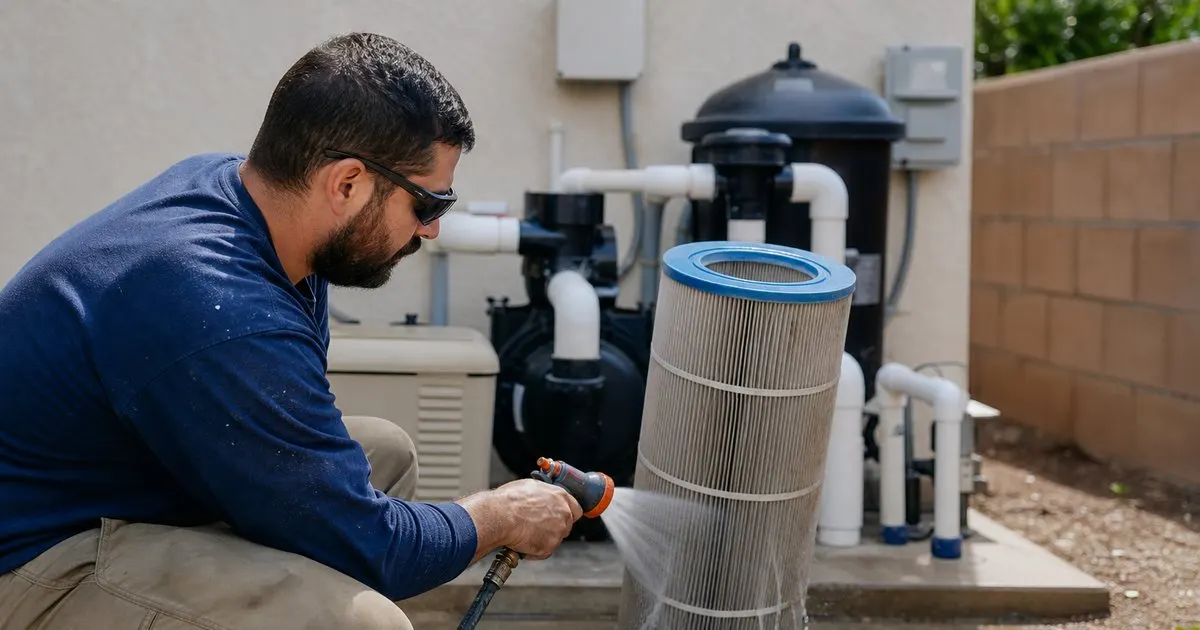
Read the pressure gauge against a known clean baseline
The gauge only means something relative to a baseline. When a cartridge is freshly cleaned or new, note the pressure with the pump at its normal speed and write it in the pool's record. On future visits, the difference between the current reading and that baseline tells you how loaded the element is. A common working rule is to clean when pressure rises somewhere around eight to ten psi above baseline, but the exact trigger matters less than being consistent and logging it. Related: Why does free chlorine keep dropping between weekly pool service visits?
A gauge that never moves is suspect. Gauges corrode and stick, especially in humid climates, and a reading of zero with the pump running usually means a dead gauge rather than a perfectly clean filter. Tap it, and replace it if it does not respond. Also watch for the opposite problem: pressure that returns to baseline after cleaning but climbs back within days, which points to a water problem (algae, high phosphates, or a coagulating clarifier) rather than a filter problem.
Keep reading: How do you balance pool water chemistry on a weekly service route?, What is the best way to log chemical readings at every pool stop?, Why does free chlorine keep dropping between weekly pool service visits?. See how PoolTendr helps you pool service route scheduling and chemical logs.
Clean it right so you can judge it fairly
A rushed rinse does not tell you much about the element. Take the cartridge out, rinse from the top down and between every pleat with a fan-spray nozzle (not a pressure washer, which can tear the fabric), and rotate slowly so nothing is missed. Oils from sunscreen and body lotion do not rinse off with water; they need a filter cleaner soak. Calcium scale needs a diluted acid soak, but only after the oils are removed, because acid can set oils into the fabric permanently.
Reassemble carefully. A cracked tank lid, a worn o-ring, or a cartridge seated slightly off center will bypass water around the element, and the gauge will read low while the pool stays cloudy. Bleed the air relief until water flows steadily, then record the post-cleaning pressure. If the clean pressure is noticeably higher than the original baseline, the element is holding permanent load and is on its way out.
Signs an element is finished
Look at the pleats. Fabric that is fraying, flattened, or collapsed against the core cannot filter well no matter how clean it looks. Bands that hold the pleats in place have snapped. The end caps are cracked or separating from the fabric. Any of these mean replace, not clean. A cartridge that has been cleaned many times in one season, or that is several seasons old, will typically show these signs before its gauge behavior does.
Behavior is the other tell. If the clean baseline pressure has crept up over the life of the element, or if the interval between cleanings keeps shrinking despite balanced water and no algae, the fabric's pores are permanently clogged. At that point cleaning is labor you are giving away. Most elements on a weekly-service pool last a few seasons with proper care; heavy-use pools, pools under a lot of tree debris, and pools where the owner shocks often wear them out faster. Related: How do you balance pool water chemistry on a weekly service route?
Build filter decisions into the route
Filter cleaning does not fit into a standard stop's time budget. Treat it as a separately scheduled service with its own time and, if your pricing allows, its own line item. Track each pool's cartridge install date, cleaning dates, and baseline pressures in the pool record so the office can see which pools are due and which elements are aging out before a tech discovers it on a hot Friday afternoon. Related: What is the best way to log chemical readings at every pool stop?
Keeping a spare element on the truck for the most common sizes on your route avoids a return trip. When you do replace one, note the model and dimensions in the pool's record so the next person does not have to guess. Filter data is one of the easiest things to track in route software, and it pays for itself the first time you catch a failing element before the water turns. Related: Which chemicals should a pool technician carry on a daily service route?
- A pressure gauge only means something against a logged clean baseline for that filter.
- Clean thoroughly, including oil and scale soaks, before judging whether an element is worn.
- Frayed pleats, broken bands, cracked end caps, or a rising clean baseline mean replace.
- Schedule filter work separately from the weekly stop and log every cleaning and install date.

Julien Jimenez
Julien Jimenez is an independent software builder based in Paris. He designs, ships, and operates focused SaaS products for small businesses and independent professionals. Read the full author page.
Every Pool, Every Reading, On Route
Pool service route scheduling and chemical logs. PoolTendr is built to help you put this into practice.
Start free trialMore from the PoolTendr blog
How do you balance pool water chemistry on a weekly service route?
What is the best way to log chemical readings at every pool stop?
Why does free chlorine keep dropping between weekly pool service visits?
Get the PoolTendr playbook
Practical guides on pool service software, straight to your inbox as we publish them. No spam, unsubscribe any time.