What should a pool service tech do when a storm dumps inches of rain into every pool on the route?
Heavy rain dilutes chemistry, overflows skimmers, and fills pools with debris all at once. Here is how to triage a route the morning after.
Reorder the route before leaving the yard
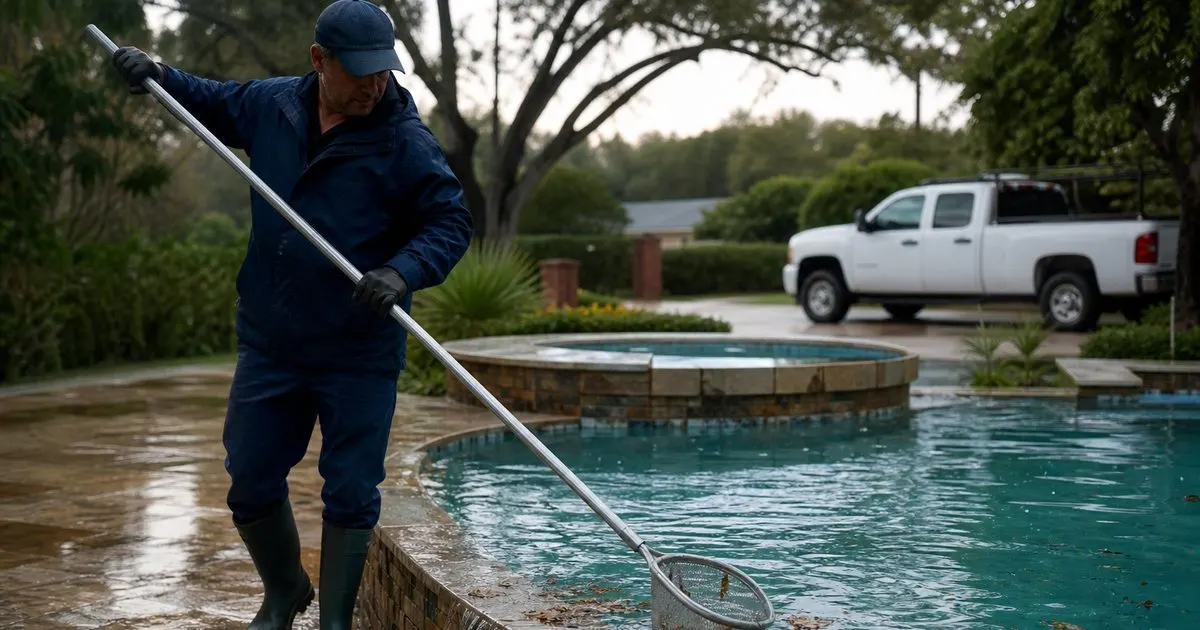
A storm day is not a normal day, and running the route in its usual order wastes the morning. Before rolling, look at which pools are most exposed: uncovered pools under heavy tree canopy, pools with low decks that catch runoff, and pools with automatic covers that may have pooled water on top. Move those to the front. Pools with screen enclosures or minimal landscaping can wait until later in the day or even until the next visit.
Call or text the customers whose stops will shift, especially anyone expecting you at a specific time. If your scheduling software supports drag-and-drop reordering, do it there so the whole team sees the new sequence and the timestamps still record correctly. Bring extra chlorine, extra acid, a spare skimmer net, and leaf bags. A storm day burns through more of everything.
Keep reading: How do you balance pool water chemistry on a weekly service route?, What is the best way to log chemical readings at every pool stop?, Why does free chlorine keep dropping between weekly pool service visits?. See how PoolTendr helps you pool service route scheduling and chemical logs.
Lower the water first, then clear the debris
Rain raises the water level, and a level above the middle of the skimmer opening means the skimmer stops pulling surface debris efficiently. Many pools will need water drained back to the normal line before anything else works well. Use the waste setting on a multiport valve, a submersible pump, or the pool's overflow drain if it has one. Do not leave the pump on waste unattended; it is easy to drain past the skimmer and lose prime.
With the level corrected, clear the surface, empty the skimmer and pump baskets (which will refill quickly), and vacuum or net the bottom. Leaves that sit on the floor for days stain plaster and feed algae, so removing bulk debris on this visit matters more than a perfect brush job. Check that the pump is moving water and the filter pressure is reasonable; a storm's worth of debris can load a filter in a single afternoon. Related: How much chlorine does a green pool need to clear up quickly?
Expect diluted chemistry and rebalance in the right order
Several inches of rain dilute everything: free chlorine, alkalinity, calcium hardness, cyanuric acid, and salt in salt pools. Rain is also mildly acidic and carries organic material, spores, and phosphates from roofs and runoff. The typical post-storm reading is low chlorine, low alkalinity, and a pH that has drifted, with a chlorine demand that stays elevated for a few days while the pool digests what washed in. Related: Why does free chlorine keep dropping between weekly pool service visits?
Test everything, not just chlorine and pH. Bring alkalinity up first so the pH will hold, then adjust pH, then raise free chlorine to the top of your normal range or slightly above to handle the organic load. Note the CYA and calcium readings; they will have dropped and may need correction on the next visit once the water has fully circulated. In a salt pool, retest salinity and add salt as needed so the generator does not shut off. Log every reading and every dose; this visit will look unusual in the record, and you want the reason documented. Related: What is the best way to log chemical readings at every pool stop?
Plan the follow-up and talk to the customer
One visit rarely fully recovers a heavily hit pool. Schedule a quick check within a few days for the pools that had the most debris or that were already marginal before the storm. That check is when you confirm chlorine held, recheck CYA and calcium, and clean the filter if pressure has climbed. Putting it on the schedule now prevents the green-pool callback next week.
Tell customers what you did and what to expect. A short note with before and after photos, the readings, and a line explaining that chlorine demand will stay high for a few days so the water may look slightly hazy reduces anxious calls. If the pool needs a filter cleaning or extra chemicals that fall outside the weekly agreement, quote it now while the storm is fresh in their mind. Customers are far more understanding the day after a storm than a week later. Related: How do you balance pool water chemistry on a weekly service route?
- Reorder the route to hit the most exposed pools first and bring extra chemicals and debris supplies.
- Drain to the normal water line before cleaning so the skimmer works and the pump stays primed.
- Rain dilutes alkalinity, CYA, calcium, and salt as well as chlorine; test everything and rebalance in order.
- Schedule a follow-up check within a few days and send customers a short photo report.

Julien Jimenez
Julien Jimenez is an independent software builder based in Paris. He designs, ships, and operates focused SaaS products for small businesses and independent professionals. Read the full author page.
Every Pool, Every Reading, On Route
Pool service route scheduling and chemical logs. PoolTendr is built to help you put this into practice.
Start free trialMore from the PoolTendr blog
How do you balance pool water chemistry on a weekly service route?
What is the best way to log chemical readings at every pool stop?
Why does free chlorine keep dropping between weekly pool service visits?
Get the PoolTendr playbook
Practical guides on pool service software, straight to your inbox as we publish them. No spam, unsubscribe any time.