How do you build an efficient weekly route for a growing pool business?
How to cluster pools, set service days, and cut windshield time as your account list grows.
Cluster pools by neighborhood and assign each cluster a fixed service day so you serve dense areas in one loop. Set consistent weekly slots customers can rely on, and add new accounts into the nearest existing cluster. As density grows, tighten each day's map to cut windshield time between stops.

Cluster by neighborhood, not by signup date
As a pool business grows, the fastest way to lose money is a scattered route. Ten pools spread across a county take all day, while ten pools in one subdivision take a morning. Group accounts by neighborhood and assign each cluster a service day so the truck works a tight area at a time. Related: How do you balance pool water chemistry on a weekly service route?
This means gently steering new customers toward the day that already serves their area. A pool three houses from an existing Tuesday stop should be a Tuesday pool, not a Friday outlier that adds a half hour of driving.
Keep reading: How do you balance pool water chemistry on a weekly service route?, What is the best way to log chemical readings at every pool stop?, Why does free chlorine keep dropping between weekly pool service visits?. See how PoolTendr helps you pool service route scheduling and chemical logs.
Chase route density
Profit in pool service lives in density: how many pools you can service per mile driven. Every account added within an existing cluster is nearly pure margin, because the drive is already paid for. A distant one-off account can cost more in fuel and time than it brings in. Related: What is the best way to log chemical readings at every pool stop?
When you evaluate new business, weigh where it sits. Sometimes the smart move is to decline or price up a pool that would strand a tech far from the rest of the route, and to court pools that tighten a cluster you already serve.
Balance the days
A route where Monday has twenty pools and Thursday has six wastes capacity. Spread the accounts so each day carries a full, workable load, and keep the geographic logic intact so a balanced day is still a tight day. The goal is five even, dense days rather than a lopsided week.
Balancing also builds in resilience. When days are evenly loaded, a rain day or a sick tech is easier to absorb, because no single day is packed to the breaking point.
Use your history to route smarter
As the account list grows past what you can hold in your head, the route has to live in a system. Knowing where every pool is, which day it belongs to, and how long it takes lets you keep adding accounts without the route quietly falling apart. Related: Why does free chlorine keep dropping between weekly pool service visits?
PoolTendr keeps every pool with its location and service day and orders each day's stops by drive time, so a growing route stays dense and balanced instead of turning into a map of crisscrossing lines. Related: Which chemicals should a pool technician carry on a daily service route?
- Cluster pools by neighborhood and assign service days.
- Chase density: more pools per mile driven.
- Balance the load evenly across the week.
- Let a system hold the route as the account list grows.

Julien Jimenez
Julien Jimenez is an independent software builder based in Paris. He designs, ships, and operates focused SaaS products for small businesses and independent professionals. Read the full author page.
Frequently asked questions
Should you take an account outside your service area?
Weigh the drive against the revenue. A lone distant pool can wreck a day's efficiency, so take it only if it pays a premium or you expect to build density nearby to justify the trip.
How many pools can one tech service in a day?
It depends on drive time, pool condition, and season, but a tight cluster lets a tech handle far more stops than a scattered route. Route density, not raw hours, is what raises the daily count.
Every Pool, Every Reading, On Route
Pool service route scheduling and chemical logs. PoolTendr is built to help you put this into practice.
Start free trialMore from the PoolTendr blog
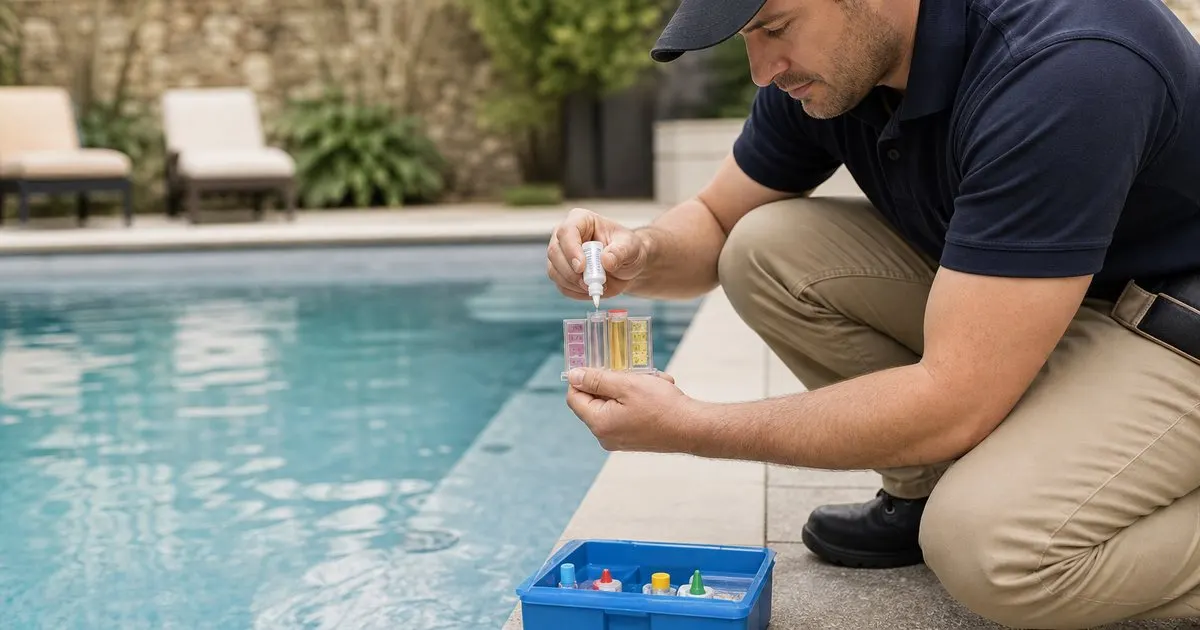
How do you balance pool water chemistry on a weekly service route?

What is the best way to log chemical readings at every pool stop?

Why does free chlorine keep dropping between weekly pool service visits?
Get the PoolTendr playbook
Practical guides on pool service software, straight to your inbox as we publish them. No spam, unsubscribe any time.