What should a pool service tech do when the water turns cloudy overnight?
A diagnostic checklist for sudden cloudiness so you fix the cause instead of chasing the symptom.
Work through causes in order. Test chlorine, pH, and alkalinity first, since imbalance and low sanitizer are common triggers. Check the filter and circulation, look for early algae, and confirm no recent fill or heavy use caused it. Fix the actual cause, then run the filter rather than just adding clarifier.
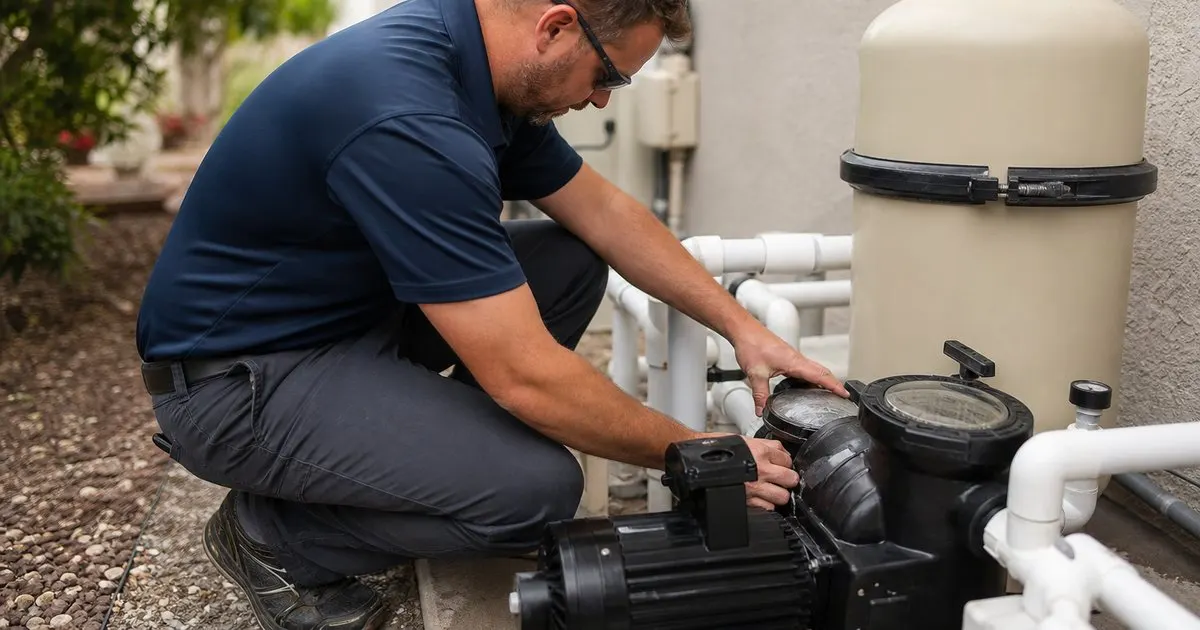
Check the chemistry first
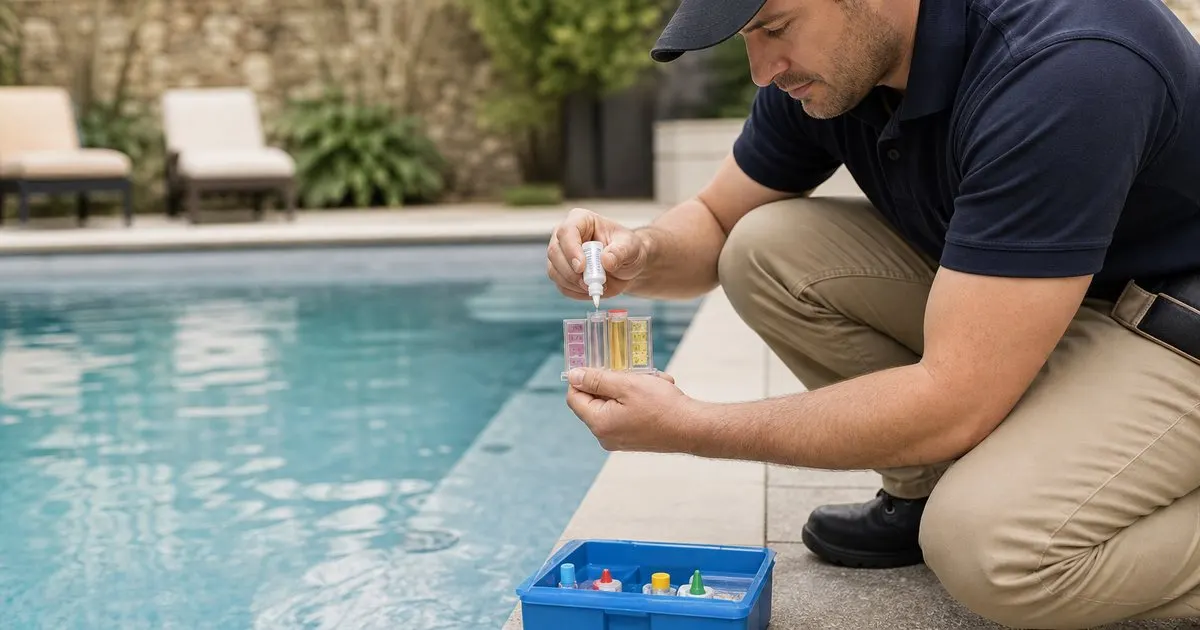
Sudden cloudiness usually starts with an imbalance. Low sanitizer lets tiny particles and early algae take hold, while high pH or high calcium can cause the water to cloud from scale. Test the full panel before you reach for a clarifier, because clarity problems are often a chemistry problem in disguise. Related: How do you balance pool water chemistry on a weekly service route?
Do not just chase the cloud with chemicals. If chlorine is low, raising it may clear the water on its own, and if pH is high, bringing it down can dissolve the haze. Fix the reading that is off before adding anything else. Related: What is the best way to log chemical readings at every pool stop?
Keep reading: How do you balance pool water chemistry on a weekly service route?, What is the best way to log chemical readings at every pool stop?, Why does free chlorine keep dropping between weekly pool service visits?. See how PoolTendr helps you pool service route scheduling and chemical logs.
Inspect the filtration
Cloudy water is often a filter that cannot keep up. A dirty or channeled filter, a clogged skimmer, or too few run hours lets fine particles stay suspended. Check the filter pressure, clean or backwash if it is high, and make sure the pump is running enough hours to turn the water over.
A pool that clouds overnight after a party or a storm frequently just overwhelmed the filter with debris and organics. Cleaning the filter and extending run time gives the system a chance to clear what is suspended.
Consider what changed
Cloudiness overnight means something happened since the last clear reading. Heavy rain, a big bather load, a fresh fill, or a recent shock that has not finished can all cloud a pool temporarily. Knowing what changed points you straight at the cause instead of guessing. Related: How much chlorine does a green pool need to clear up quickly?
Recent shocking is a common one. A pool can look cloudy the day after a shock as dead organics and precipitates get filtered out, and the fix is patience and filtration, not more chemicals. Related: When should you shock a residential pool during the peak swim season?
Treat, run the filter, and re-check
Once you have identified the cause, correct the chemistry, clean the filter, and run the pump continuously until the water clears. A clarifier or flocculant can help the filter grab fine particles, but it is a helper, not a substitute for balanced water and working filtration.
PoolTendr shows the pool's recent readings and what you last did, so when a pool clouds up you can see what changed since the last visit and target the real cause rather than throwing clarifier at a filtration or chemistry issue.
- Test the full chemistry before adding clarifier.
- Check and clean the filter and extend run time.
- Ask what changed: rain, bathers, fill, or a recent shock.
- Correct the cause, filter, and re-check rather than guessing.

Julien Jimenez
Julien Jimenez is an independent software builder based in Paris. He designs, ships, and operates focused SaaS products for small businesses and independent professionals. Read the full author page.
Frequently asked questions
Is cloudy water always a chemistry problem?
No. Poor filtration or circulation, a dirty or undersized filter, or high calcium and pH can cloud water even when sanitizer looks fine. Rule out the equipment before assuming a chemical imbalance.
Does clarifier fix cloudy water on its own?
Clarifier only helps the filter capture fine particles. It masks the symptom if the real cause is low chlorine, imbalance, or a struggling filter, so correct the cause first and use clarifier as a finishing aid.
Every Pool, Every Reading, On Route
Pool service route scheduling and chemical logs. PoolTendr is built to help you put this into practice.
Start free trialMore from the PoolTendr blog
How do you balance pool water chemistry on a weekly service route?
What is the best way to log chemical readings at every pool stop?
Why does free chlorine keep dropping between weekly pool service visits?
Get the PoolTendr playbook
Practical guides on pool service software, straight to your inbox as we publish them. No spam, unsubscribe any time.