What is the best way to train a new pool technician before they run a route alone?
A practical ramp-up plan for turning a new hire into a tech you can trust on a solo route, from ride-alongs to the first supervised week.
Start with ride-alongs, not a manual
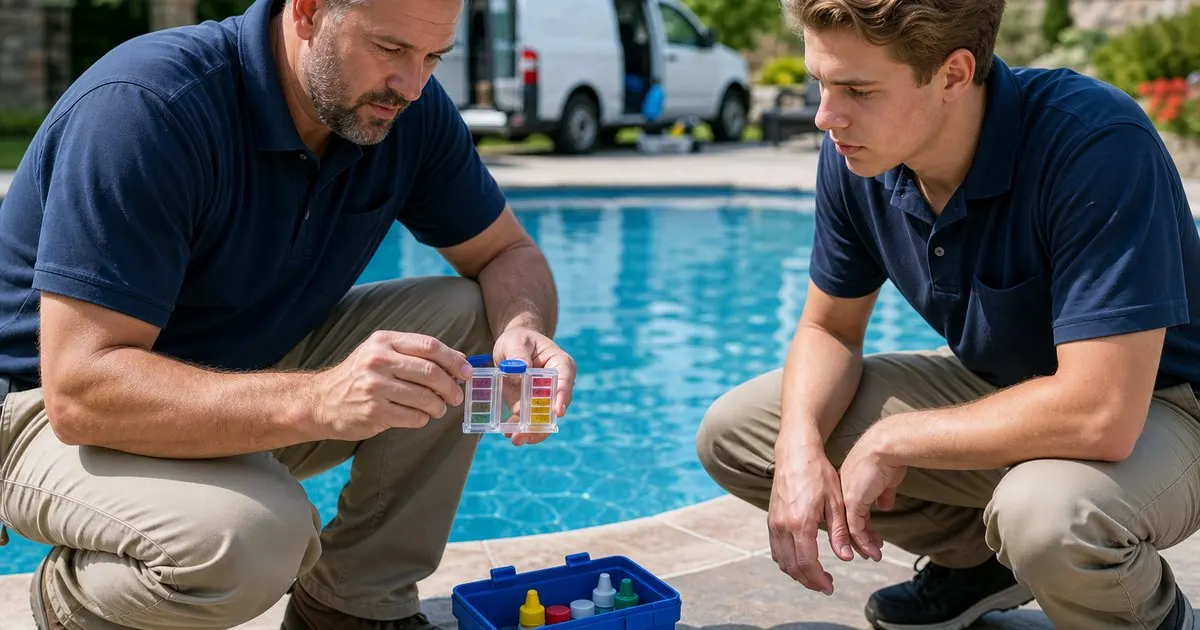
The fastest way to lose a new hire is to hand them a binder and a truck on day two. Ride-alongs with your best tech for the first week or two let them absorb the rhythm of a stop: pull up, check the equipment pad, test water, brush, empty baskets, dose, log, leave. Have the trainee watch the first few stops, then take on one task per stop (baskets, then brushing, then testing) while the senior tech observes and corrects in the moment.
Keep the ride-along stops the same ones the trainee will eventually own if you can. Pools have personalities: the one with the leaky skimmer weir, the one where the owner's dog opens the gate, the one that eats chlorine because of a heavy tree canopy. Learning those quirks alongside someone who already knows them is worth more than any generic checklist, and it means the customer meets the new face while a familiar one is still standing there.
Keep reading: How do you balance pool water chemistry on a weekly service route?, What is the best way to log chemical readings at every pool stop?, Why does free chlorine keep dropping between weekly pool service visits?. See how PoolTendr helps you pool service route scheduling and chemical logs.
Teach water testing until it is boring
Testing is the skill that separates a pool cleaner from a pool technician. Spend real time on it: how to rinse the comparator, how to take the sample elbow-deep and away from returns, why a DPD test that flashes pink and fades means very high chlorine rather than zero, how to recognize a titration endpoint. Have the trainee test the same pool right after the senior tech and compare numbers. Repeated agreement builds confidence; disagreement tells you exactly where the gap is. Related: Which chemicals should a pool technician carry on a daily service route?
Then connect readings to actions with simple decision rules. Free chlorine below your target range means a dose calculated from the pool's volume; pH above target means acid in a measured amount, never eyeballed. Give them a dosing reference for the pool sizes on your route and have them work through the arithmetic out loud until it sticks. A tech who understands why they are adding something will catch mistakes that a tech following a script will not. Related: How do you balance pool water chemistry on a weekly service route?
Cover the equipment pad and the safety basics
New techs are often nervous around the pad. Walk through it: what a normal pressure gauge reading looks like for that filter, how to bleed air, how to backwash a sand or DE filter, how to open and close a cartridge filter without stripping the clamp, where the pump lid o-ring sits. Show them what a leaking shaft seal looks like and what an air leak on the suction side sounds like. They do not need to repair everything in month one, but they need to recognize problems and report them clearly.
Safety is not optional content. Muriatic acid and chlorine are never stored or transported together, and never mixed. Gloves and eye protection go on before dosing. Chemical containers stay capped and secured in the truck. Go over gate and fence etiquette, what to do if a child is unattended near a pool, and how to handle a dog on the property. Write these into a one-page safety sheet the trainee signs, and keep a copy in the truck. Related: Why does free chlorine keep dropping between weekly pool service visits?
Graduate to a supervised solo week
Once the trainee can run a full stop unassisted while you watch, give them a short route of forgiving pools for a week. Review every chemical log the same day. Look for readings that never change (a sign of guessing), doses that do not match readings, and stops that took far less time than they should have. Call them mid-day the first few days, not to check up, but to be available for questions before a small problem becomes a callback. Related: What is the best way to log chemical readings at every pool stop?
Set expectations for the first month: photos of the equipment pad and the water at every stop, a note on anything unusual, and a quick end-of-day debrief. Route and logging software makes this review painless because readings, timestamps, and photos sit in one place, but a shared spreadsheet and phone photos work too. The point is that nothing on the new tech's route goes unseen for the first thirty days.
- Ride-alongs on the pools a trainee will eventually own teach more than any binder.
- Water testing and dosing math deserve repeated practice until the numbers agree with a senior tech.
- Equipment recognition and chemical safety are baseline skills, not advanced ones.
- The first solo weeks need same-day log review and a short daily debrief.

Julien Jimenez
Julien Jimenez is an independent software builder based in Paris. He designs, ships, and operates focused SaaS products for small businesses and independent professionals. Read the full author page.
Every Pool, Every Reading, On Route
Pool service route scheduling and chemical logs. PoolTendr is built to help you put this into practice.
Start free trialMore from the PoolTendr blog
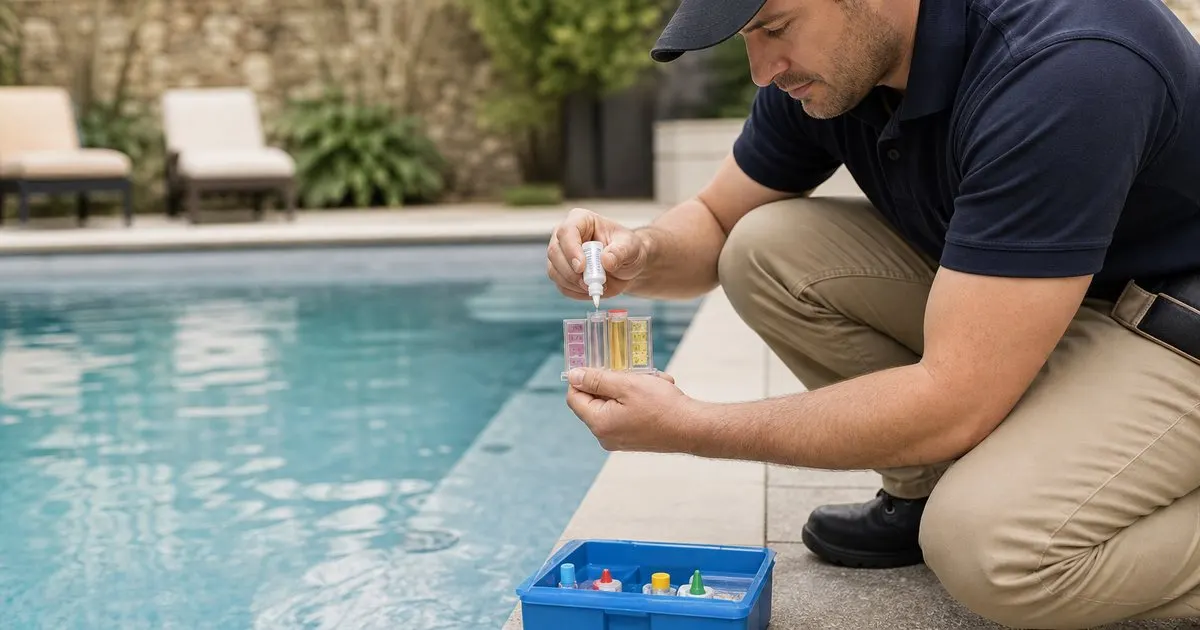
How do you balance pool water chemistry on a weekly service route?
What is the best way to log chemical readings at every pool stop?
Why does free chlorine keep dropping between weekly pool service visits?
Get the PoolTendr playbook
Practical guides on pool service software, straight to your inbox as we publish them. No spam, unsubscribe any time.